

Browned Butter Corn Madeleines
Part 2 in our Corn Triptych

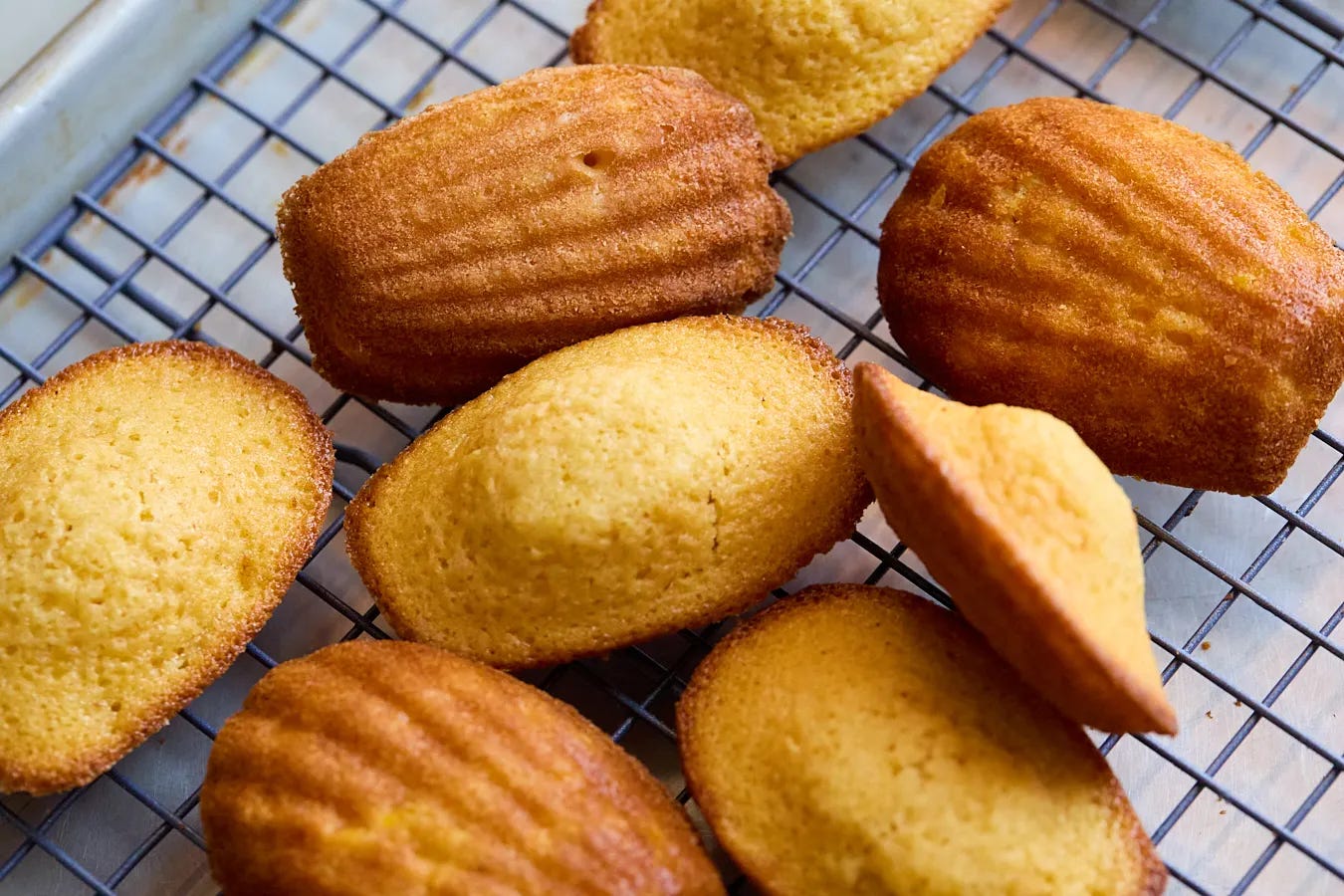
This week, we’re continuing our trio of corn confections. Last week, I shared this blueberry corn cream pie with a cornmeal cookie crust. For the coming installment: corn ice cream — so stay tuned.



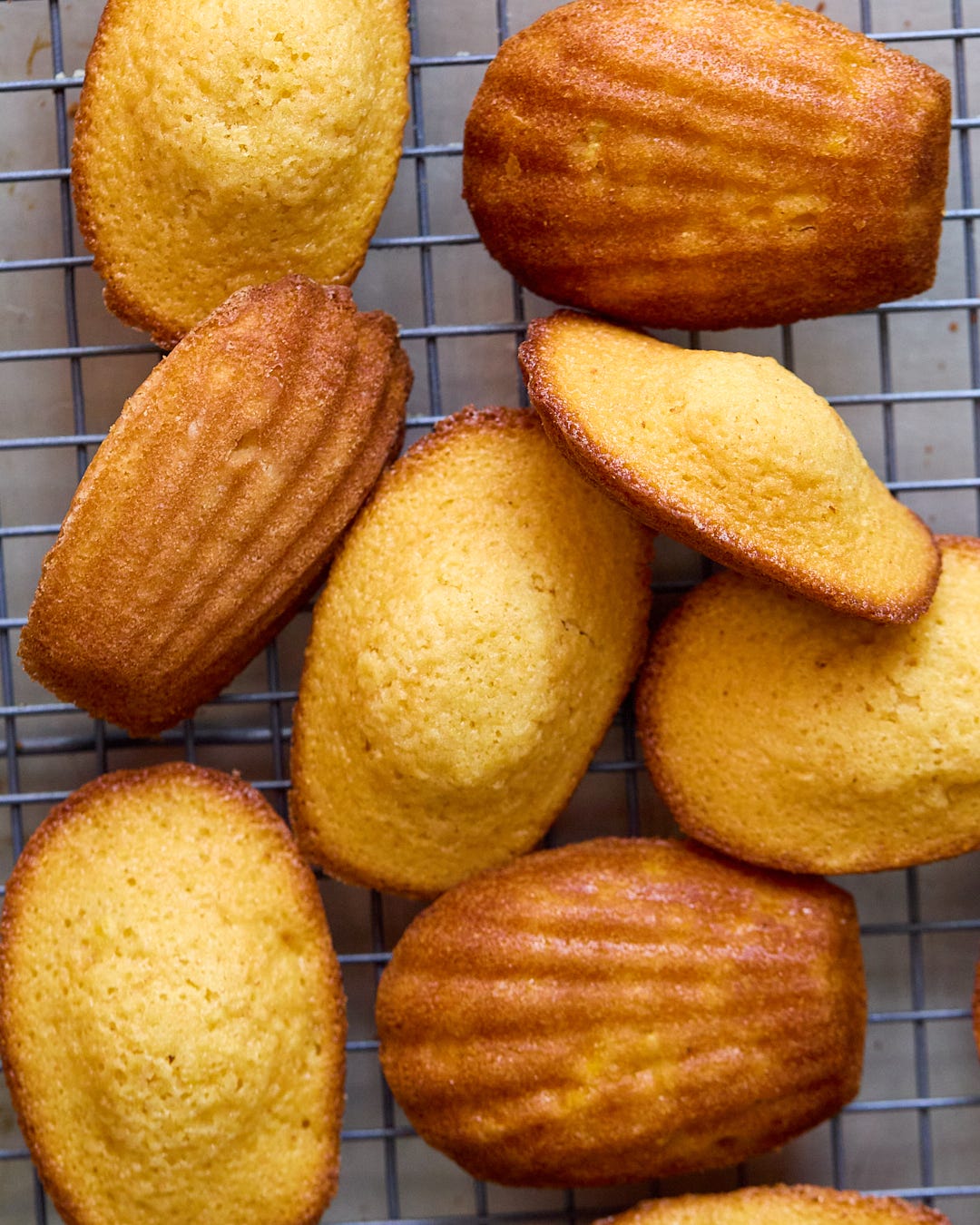
Much has been written on what gives madeleines, the small, shell-shaped French cakes, their signature hump. Some swear that the key is a long chill time for the batter. When the cold batter hits the hot oven, the outside cooks faster than the inside, leaving the expanding insides with nowhere to go but up. However, when I landed on my final batter, it was surprisingly able to achieve a bump straight out of the room-temp mixing bowl. That being said, the chilled batch did bump a bit higher.
Some say the amount of baking powder is responsible, which makes sense as the it’s the only leavener in the recipe, but I found that after a certain amount, it stops making a big difference and eventually leads to a collapsed mini cake.


In the same way that muffins spring up higher when you stagger in the tin (only filling every other well) I thought the same would apply here. And it did! Madeleines that were surrounded by empty wells did rise a bit higher — but they also baked slightly faster, so keep that in mind. And unless you have a 16-cup tin, you’ll have to bake in two batches, anyway.


But the variable I found that made the most hump-height difference between my different batter ratios was surprising. The secret factor was batter viscosity and moisture content. Thin batters comprised of more liquid (for me, butter, milk and oil) rose higher than their thicker counterparts in testing. I was worried they would overflow from the pan, but I think that’s why they worked. The thicker batters were less flexible in the oven, leading to a more rigid rise. They also cooked more evenly since there was less water to evaporate off, leading to an outside and inside that cooked at about the same rate.
In the first few minutes of being exposed to the ripping hot oven air, the thinner batter would set on the outside, but would still be raw and liquid-y on the inside, allowing it to expand upward and outward. And because thinner batters contained more water, which turns to steam and expands in the oven, I believe this also gave them a big boost.
So, yes, it’s a symphony of variables that lead to the prized hump that frustrate and elude so many bakers, but some are more important than others.


Here’s a serving suggestion: Sandwich some corn ice cream (recipe coming in a week) between two madeleines to make a clam-and-pearl! It helps to shave off some of their hump — I know, I know, how could I!) I got this idea from Paris Starn, who is the queen of extremely chic and artful bakes.

A note about pans. Both dark-colored nonstick and light-colored aluminum tins produced delicious cakes with distinct humps, but I prefer one over the other. I went out and bought a dark nonstick pan during testing because I thought that might help the cakes rise up and form the signature bump. (Dark pans get hotter and a hotter initial oven temperature is partly responsible for a tall oven-spring.) It worked, but not before getting over-baked on the outside, so I dialed the temperature down to accommodate for the change. The lower temp lead to more even browning but, alas, a bit of a smaller hump. But a hump nonetheless!
My light-colored aluminum tin had a much greater need to be greased and floured, unlike the nonstick, but could be used at a higher temperature without scorching the outside of the cakes.

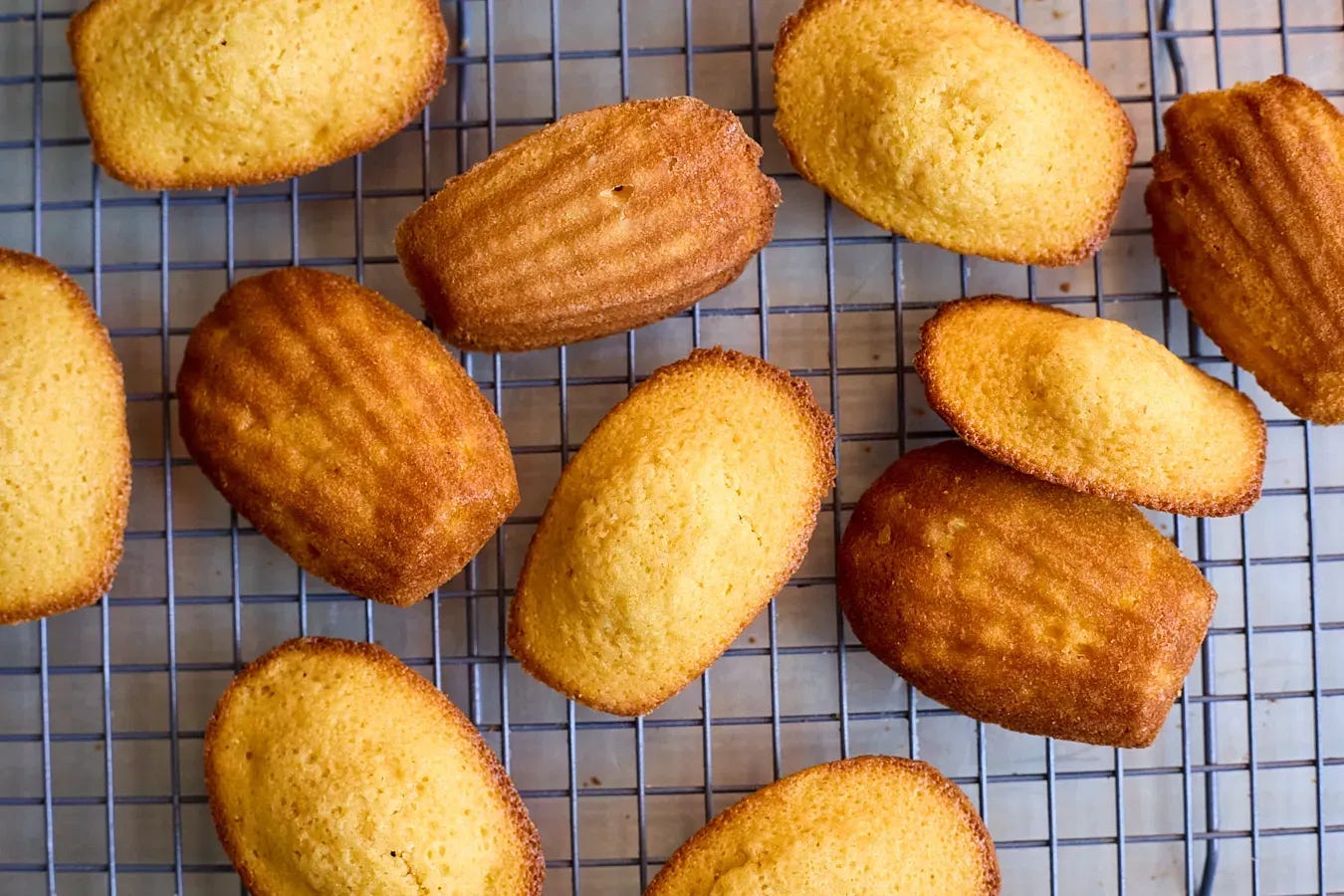

Makes about 16 madeleines
Ingredients
