

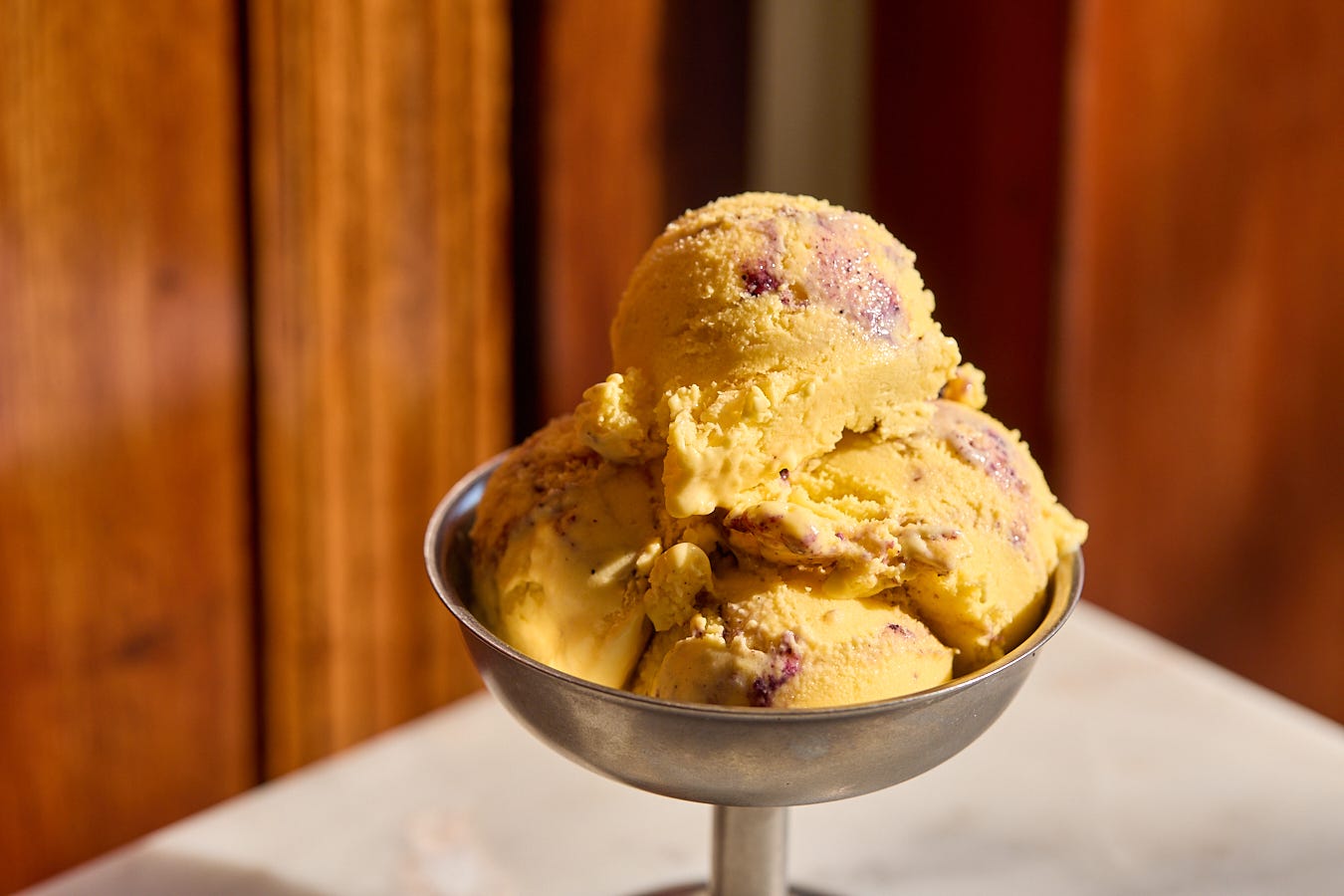
Sweet Corn Ice Cream
with optional blueberry ripple


I’m ♪baaaaack♪ … from a week in Provincetown, MA — did you miss me? I have a few more summer-ready recipes for you before Labor Day when we will go full Orange-and-Brown-Food-Season here at easygayoven HQ. I don’t want the warm, long days to be over either, but if it means an end to thunderstorms, heat waves, orange skies, and my power going out multiple times, I’ll cope. Next stop: Hurricane Season?
We didn’t do as much food-related stuff as last time, but we did hike up the Pilgrim Monument (15 minutes of ramps, thankfully) and visit the Provincetown Institute of Art. And we can never leave without going to Sal’s which is leagues ahead of 50% of the other, frankly mediocre, food in the beach town. (I’ve never had a clam chowder that resembled Jell-o, until this trip — on Cape Cod no less!) Here are some highlights, if you care:




If you ever wonder why I put some of my recipes behind a paywall, it’s because unlike some other unnamed creators, I actually test mine. And I don’t get them from ChatGPT — or outright lift them! Multiple rounds of development, which can take anywhere from two hours to two days, go into each one.


This corn ice cream, for example, took 7 8 tests over the course of development, which has left me with a lot of ice cream. (I know, hell is on earth.) But with the blueberry corn cream pie and browned butter corn madeleines out in the world, this is the final installment in our Corn Triptych of recipes. Corn haters, rejoice.


The main problem presented by this recipe is a factor that plagues many ice cream recipes: water. Ice cream is usually made with heavy cream and milk — and if you’re making a custard-based ice cream, egg yolks. Heavy cream and milk are both emulsions of fat and water, and egg yolks provide protein and fat to trap the water in them and provide a creamy mouthfeel. When water isn’t trapped, or there’s too high a percentage of water in the ratio, you wind up with large, rogue crystals of frozen water … which is ice. Our tongues detect that as grittiness, making ice cream taste more icy than creamy.


Since fresh corn is about 70-75% water, and we’re straining out the pulp, we’re basically dumping corn-flavored starchy water into the base recipe, which we need to account for. Many initial batches were rock-solid, impossible to scoop, gritty, crumbly, and far from creamy. It took a lot of tweaking to figure out that more egg yolks, more invert sugar, more cream, stabilizers like xanthan gum weren’t the solution: we needed to cook off some of the water.


Another factor in the formation of large ice crystals is the speed at which your ice cream churns and freezes. That’s why we chill the base before churning. We’re trying to drop it's temp to 40°F or lower, so that it takes less time to get to its freezing temperature in the machine, which varies by recipe and flavor. Invert sugars like corn syrup, agave, honey, and more, can also inhibit the formation of large ice crystals, so we’re employing that as well.


I’m calling for us to use xanthan gum in the recipe. It’s one of many stabilizers pros use to keep their ice cream creamy, scoop-able and long-lasting in the freezer, especially the (more common) kind that doesn’t use egg yolks. We are using egg yolks here, so it’s not crucial. It’s affordable, and you can easily get it online or at some grocery stores or specialty food/cooking stores, but I know you guys hate a one-use ingredient, so I will say it’s not absolutely necessary. But I think it’s worth it.




Makes about one quart of ice cream
Ingredients
